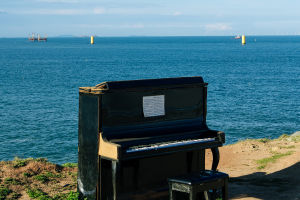
A piano and a guitar naturally complement each other in art because they contrast in shape, texture, and visual weight. The piano introduces strong geometric structure, while the guitar contributes flowing curves and warmer organic forms.
Whether you are creating an oil painting, acrylic work, or detailed drawing, understanding how these two instruments interact will help you build a composition that feels balanced rather than crowded.
Design a Balanced Musical Composition
Every successful still life begins with thoughtful planning. Before mixing colors, decide how the viewer should experience the scene and where their attention should naturally begin.
These practical composition techniques help transform ordinary objects into a convincing artistic arrangement.
Decide which instrument leads the story
Avoid giving the piano and guitar identical visual importance.
If the piano is the main subject, allow it to occupy the largest area while using the guitar as a secondary element that directs attention toward the keyboard. If the guitar becomes the focal point, place it where its silhouette overlaps the piano slightly without hiding important features.
One clear focal point creates stronger visual organization than two competing centers of interest.
Build the composition with large shapes first
Before thinking about keys, strings, pedals, or sheet music, simplify everything into major forms.
The piano becomes one large rectangular mass, the guitar becomes one elongated curved shape, and furniture or rugs become supporting blocks of color. If these large shapes already feel balanced, later details will strengthen the composition rather than rescue it.
Professional painters often adjust these simple shapes repeatedly before beginning detailed work.
Use overlapping to create depth
Objects placed side by side can appear flat.
Instead, allow the guitar to overlap part of the piano, place a stool slightly in front of the keyboard, or position sheet music where it partially covers the instrument. These overlaps immediately establish spatial depth without requiring complicated perspective.
Keep every important object recognizable even when overlaps occur.
Guide the eye with supporting objects
Small objects should reinforce the composition instead of distracting from it.
A lamp, framed artwork, music book, or decorative sculpture can help direct attention toward the instruments if positioned thoughtfully. Arrange these supporting elements so they gradually lead the eye toward the focal point rather than scattering attention throughout the room.
If removing one decorative object improves the composition, leave it out.
Create Atmosphere Through Light and Texture
Once the composition feels balanced, begin developing materials, lighting, and expressive brushwork. These qualities often determine whether a still life feels convincing or simply descriptive.
Careful observation combined with selective simplification produces stronger artwork than painting every visible detail.
Establish one consistent light source
Determine the direction of the light before painting reflections or shadows.
Highlights on polished wood, piano keys, and the guitar body should all respond to the same light direction. Consistent lighting makes every object appear part of the same environment, even when colors become expressive.
Block in the largest shadow shapes early instead of adding them after details are complete.
Paint different materials differently
The piano, guitar, fabric rug, paper, and metal hardware each reflect light in unique ways.
Smooth polished wood benefits from gradual transitions between light and shadow, while woven textiles can support more textured brushwork. Metallic details usually require smaller, brighter highlights than wooden surfaces.
Changing your brush technique according to the material immediately increases realism.
Simplify repeated details
Piano keyboards contain many repeated keys, and guitars contain several nearly parallel strings.
Instead of painting every repeated element with identical precision, establish the overall rhythm first. Sharpen only the sections nearest the focal point while allowing less important areas to remain suggested.
The viewer naturally completes these repeating patterns without needing every detail fully described.
Control edge sharpness
A painting becomes easier to read when edges vary.
Reserve crisp edges for the focal area, such as the keyboard, guitar body, or sheet music. Allow less important objects, background artwork, or distant furniture to soften slightly.
This variation guides attention naturally while creating greater depth throughout the room.
Use color to establish mood
Warm earth tones, muted neutrals, and soft golden light often create an intimate indoor atmosphere.
If you introduce stronger colors through rugs, artwork, or decorative objects, repeat those colors in small amounts elsewhere so they feel intentional rather than isolated.
Color harmony depends more on repetition than on using many different pigments.
Separate observation from artistic interpretation
Some aspects of the painting are based on direct observation. Perspective, proportional relationships, consistent shadows, and the way light falls across polished wood can all be verified by studying the actual scene.
Other decisions belong to artistic interpretation. You may deepen warm evening light, simplify background decorations, increase color contrast, or reduce visual clutter to strengthen the composition. These choices express your artistic intention rather than claiming the room appeared exactly that way.
Keeping this distinction clear allows your work to remain visually believable while still reflecting your personal style.
A compelling piano and guitar still life is created through careful planning rather than countless details. By establishing a clear focal point, organizing large shapes first, controlling light, varying textures, simplifying repeated forms, and distinguishing observable visual principles from artistic interpretation, you can create an artwork that captures both the physical beauty of the instruments and the quiet atmosphere of music waiting to be played.