Hi, Readers! When we look up at the night sky, stars can seem calm and unchanging.
But each one is living through a long story. A star begins inside a cold cloud of gas and dust, grows through a long stable period, and then changes dramatically as its fuel runs low.
Its final path depends mostly on one thing: how much mass it has from the start.
Where a star begins
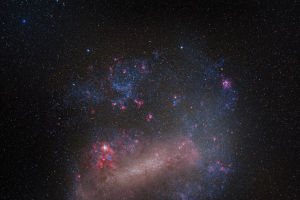
Stars are born in large clouds of gas and dust called nebulae. Gravity slowly pulls material together into tighter and tighter clumps. As the gas gathers, the center becomes hotter and denser. This early stage is often called a protostar. At first, the object is still forming, but the pressure and temperature inside keep rising. When the center becomes hot enough for nuclear fusion to begin, a true star is born.
The long steady middle
Most of a star’s life is spent in the main sequence stage. During this period, the star fuses hydrogen into helium in its core. That process releases energy, which pushes outward while gravity pulls inward. This balance keeps the star stable for a very long time. Our Sun is in this phase right now. Smaller stars use fuel more slowly and can last much longer, while larger stars burn through their fuel much faster.
When the fuel runs low
A star does not stay in balance forever. After much of the hydrogen in the core is used up, the core begins to contract and heat up. The outer layers expand, and the star becomes much larger. A Sun-like star turns into a red giant. In this stage, fusion can continue in new ways, depending on the star’s size and internal conditions. The changes become more intense as the star moves closer to the end of its life.
Smaller stars and quiet endings
For stars with lower mass, the ending is gentler. After the red giant stage, the star sheds its outer layers into space, creating a glowing shell of gas called a planetary nebula. What remains at the center is a white dwarf, a hot and dense stellar core left behind after fusion stops. Over a very long time, that remnant cools and fades.
Massive stars and dramatic finales
Very massive stars live shorter lives but end in a much more powerful way. After passing through giant or supergiant stages, they can fuse heavier and heavier elements in their cores. Eventually, the core can no longer support itself. It collapses rapidly, and the star explodes as a supernova. What remains may become a neutron star or a black hole, depending on how much mass is left after the explosion.
Why this cycle matters
The life cycle of stars shapes the universe around us. Stars create many of the elements that later become part of planets, moons, and even living things. Their births light up galaxies, and their endings send material back into space, where new stars can form again. So when you see a star shining above you, you are really looking at one moment in a very long and beautiful journey.
In the end, a star’s story is about change, balance, and renewal. Some fade quietly, and some leave with astonishing brilliance, but each one helps build the universe in its own way. If you want, next we can also explore how the Sun will change in the far future or how astronomers tell what stage a star is in.