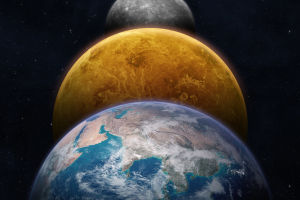
Imagine a world where space travel is as routine as taking a plane. You hop on a ship, head to a distant star system, and explore new worlds.
For centuries, this has been the realm of science fiction. From Star Trek to Star Battles, interstellar travel has captured our imagination. But is it just a dream, or is there a chance that we might one day journey to other star systems?
The possibility of traveling beyond our solar system has intrigued scientists and dreamers alike. While it seems like a distant fantasy, recent scientific advances are making the idea of interstellar travel seem less impossible.
The concept of traveling between stars has been around since the early days of human curiosity about space. But with the development of faster spacecraft and better understanding of physics, the idea has slowly transformed from fiction into a scientific question. Can we ever break free of Earth's gravity and journey across light-years? Let's explore the science behind the dream and the challenges ahead.
The Science of Interstellar Travel
In order to understand interstellar travel, we need to first grasp how vast space really is. The closest star to Earth, Proxima Centauri, is over 4 light-years away. One light-year is approximately 5.88 trillion miles (9.46 trillion kilometers), so getting to Proxima Centauri with current technology would take tens of thousands of years. This distance alone shows how difficult interstellar travel will be. But how can we make the impossible possible?
1. Speed is key: Current spacecraft, such as NASA's Parker Solar Probe, travel at speeds of around 430,000 miles per hour (700,000 km/h). However, this is far too slow to reach even the closest stars in a human lifetime. For instance, at this speed, it would take more than 17,000 years to reach Proxima Centauri.
2. Theoretical technologies: Several ideas have been proposed to speed up space travel. One of the most talked-about concepts is the warp drive, inspired by Star Trek. This theoretical technology would allow a spaceship to "fold" space, creating a shortcut between distant points. While no warp drive exists, scientists are exploring the possibility of manipulating space-time to achieve faster-than-light travel.
3. Solar sails: Another idea gaining traction is using solar sails—thin sheets of material that catch light from the sun or lasers to propel a spacecraft. In 2018, the Breakthrough Starshot project launched a small, lightweight probe equipped with a solar sail that could, in theory, reach Proxima Centauri in just 20 years. While the technology is still in its infancy, it offers a glimpse of how interstellar travel might become a reality.
Challenges to Overcome
Despite the exciting ideas floating around, interstellar travel faces enormous challenges. Let's take a look at some of the obstacles that need to be tackled before we can set foot on another star system.
Energy requirements: The energy needed to power a spacecraft to speeds fast enough for interstellar travel is currently beyond our capabilities. To travel at a significant fraction of the speed of light, we would need an incredible amount of energy, which is difficult to generate with current technology. Theoretical power sources, like matter-antimatter engines, could provide the energy needed, but they remain speculative at best.
Radiation hazards: As a spacecraft travels through space at high speeds, it would encounter particles and radiation that could damage the ship and its occupants. Cosmic rays, for example, can be harmful to both equipment and astronauts. Developing effective shielding to protect against this radiation is a critical challenge.
Time and space: Even if we do find a way to travel at near-light speeds, the time it takes to travel between stars poses another issue. In addition to the immense distances, the ship would also have to account for the effects of time dilation—where time slows down for astronauts traveling at high speeds. This could mean that while astronauts might age only a few years, decades or centuries could pass on Earth.
Are We Ready for Interstellar Travel?
Despite the massive hurdles, we are making significant strides toward interstellar travel. Space agencies like NASA, private companies like SpaceX, and research initiatives like Breakthrough Starshot are pushing the boundaries of what's possible.
Moreover, the search for exoplanets—planets that orbit stars outside our solar system—has revealed that there are potentially habitable worlds within reach. The discovery of Proxima b, a planet in the habitable zone of Proxima Centauri, has fueled interest in finding ways to travel there.
As technology advances, the feasibility of interstellar travel may become more plausible. It may not happen in our lifetime, but the groundwork is being laid for future generations. Whether through innovations in propulsion, energy generation, or new discoveries in physics, the dream of interstellar travel could one day be realized.
Looking Beyond Our Solar System
The idea of interstellar travel is no longer confined to the realm of science fiction. With each new breakthrough, we're moving closer to understanding how we might one day leave our solar system and explore the vastness of the stars.
While we're not ready to embark on interstellar journeys just yet, the pursuit of this goal has already led to remarkable advancements in space exploration and technology. The journey to the stars may still be far off, but every step forward brings us closer to a future where space travel is no longer just a fantasy.
As we continue to push the boundaries of human knowledge, one thing is clear: the stars are within our reach. It may take time, but with innovation and perseverance, one day, we might just find ourselves venturing beyond our own solar system.